
By Scarlet Neath, Director of Reimagining Public Safety, and Josh Gordon, Senior Communications Associate
Safe Roads for All (Policing Project and American Civil Liberties Union)
Every day in the United States, more than 100 people die in traffic crashes. In 2021, that added up to nearly 43,000 lives lost – a 16-year high – and more than 2 million preventable injuries.
That toll isn’t inevitable. This month, we released Safe Roads for All, a new report with the American Civil Liberties Union that traces how this crisis came to be, documents its consequences, and outlines evidence-based strategies that jurisdictions are already using to build a more effective approach to roadway safety.
The core takeaway: we cannot enforce our way out of a public health crisis rooted in poor design, misaligned incentives, and decades of policy choices that prioritized the flow of cars over the safety of people.
There is No Such Thing as a Traffic “Accident”
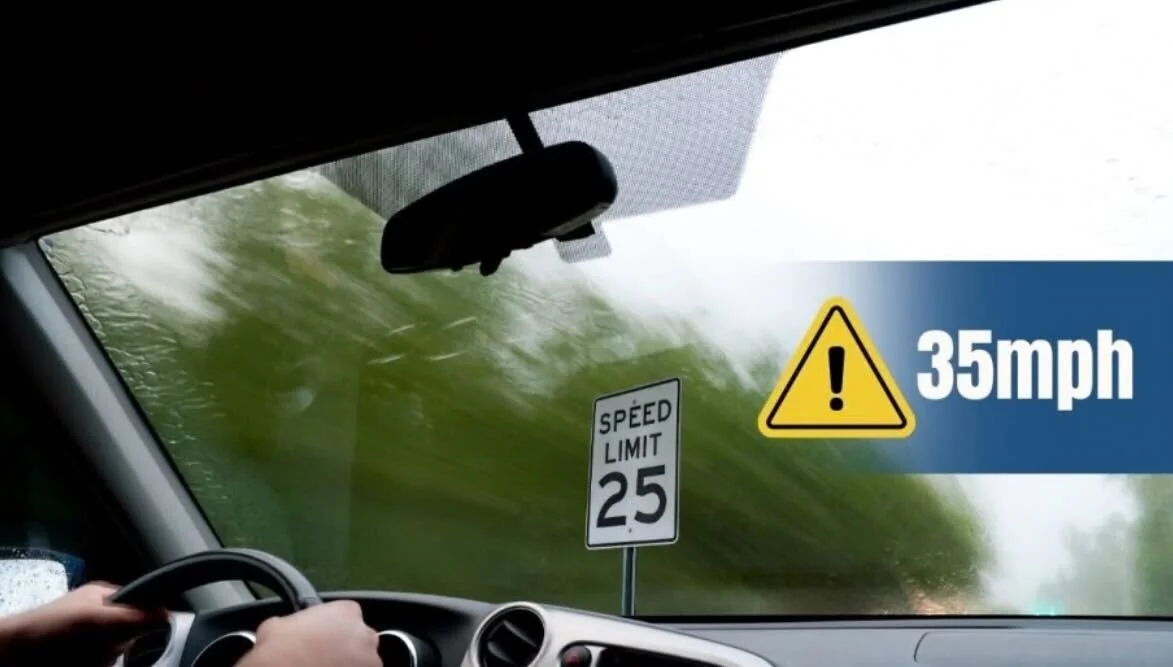
American roads are uniquely dangerous – not because American drivers are more reckless, but because our system fails to prevent known dangers.
Since the advent of the automobile, and especially since the proliferation of American suburbs and the rise of the automobile industry following World War II, American towns and cities have prioritized convenience for cars over safety and accessibility for communities. Public transportation has been inadequate, creating a dependence on cars for basic transportation. Speed limits have been set too high, based on the speed most people drive rather than what is actually safe. Vehicles are unnecessarily large and under-regulated for safety features; where there is regulation, it focuses on the occupants of vehicles, rather than pedestrians. And our roads themselves are extraordinarily dangerous: highway lanes, for example, are unnecessarily wide and local roads often have poor visibility, due to a lack of lighting.
Policymakers have largely responded to the ensuing traffic safety crisis by focusing on the actions of individual drivers rather than fixing systemic problems like safe road design or adequately regulating vehicles. This emphasis on enforcement, however, has often not targeted the most dangerous actions or locations. Police traffic stops have long favored high volumes of low-level infractions like minor equipment issues or paperwork problems instead of dangerous activities like speeding or drunk driving.
In fact, many times they’re not even intended to address traffic safety. Low-level traffic stops are often used as a pretext for police to try to uncover evidence of more serious – and unrelated – crimes. In other words, they’re intended as a public safety tool, rather than a traffic safety one. But research shows that they are not particularly effective at fighting crime, either. Evidence from multiple studies shows that police uncover evidence of a serious crime in fewer than one percent of traffic stops.
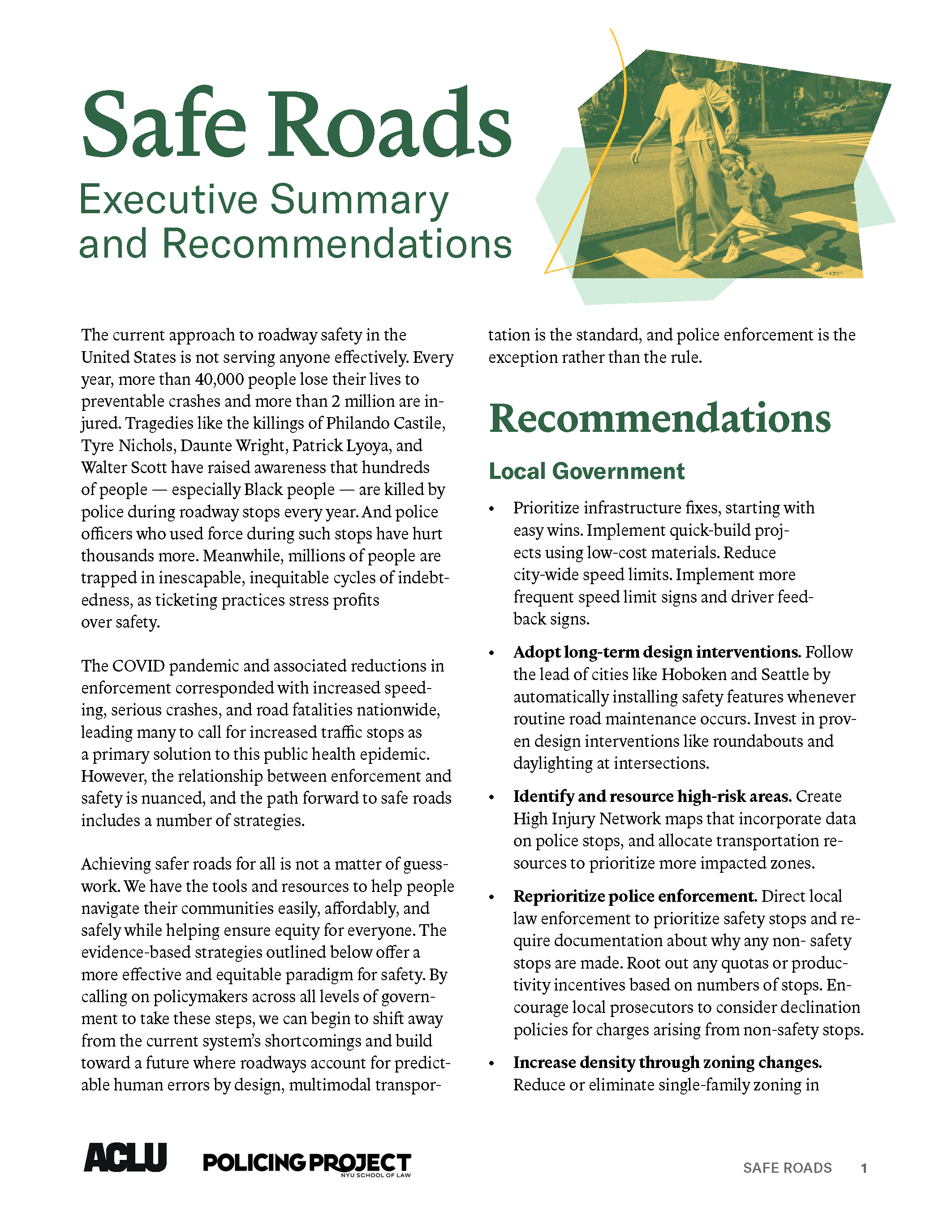
Safe Roads for All: Executive Summary and Recommendations (Policing Project and American Civil Liberties Union)
And importantly, these stops come at a high cost. Sending armed officers to handle an expired tag or a broken headlight risks creating unnecessary points of conflict. Too many high-profile encounters have ended in death and millions more people are stopped unnecessarily every year. Even where no violence ensues, fines and fees can trap people in cycles of debt and erode community trust.
Our new report does not argue against traffic enforcement altogether. Instead, it recommends using it as part of a multi-faceted strategy to actually improve road safety.
But today, in many jurisdictions, up to half of all traffic stops are for non-safety purposes like minor equipment or paperwork issues. And in 2021, at least 20 states used traffic stop quotas to assess police performance as part of their federal highway safety grants.
Police officers cannot be everywhere at once. When our limited police resources are used to pull over a driver, that enforcement should target genuinely dangerous behavior – and serve as a cue that permanent, preventative fixes like speed bumps, roundabouts, and timed lights are necessary.
Shifting from Punishment to Protection
There’s no shortage of solutions, many of which are being adopted across the country already. New York City passed Sammy’s law in 2024 – named for 12 year old Sammy Cohen Eckstein who was killed by a speeding van in 2013 while walking to soccer practice – which enabled the city to set its own speed limits. Now New York is joining other major urban cities like London in shifting to a 20 miles per hour speed limit, starting with school zones.
Traffic calming measures can also slow speeds significantly by making roads self-enforcing, meaning that they deter unwanted driving behavior before it happens. For example, narrowing lanes can lead to a considerable decline in crashes as drivers reduce their speed and move more cautiously when the road is less wide. Furthermore, narrowing roads reclaims space for protected bike lanes, rail lines, or safer walkways.
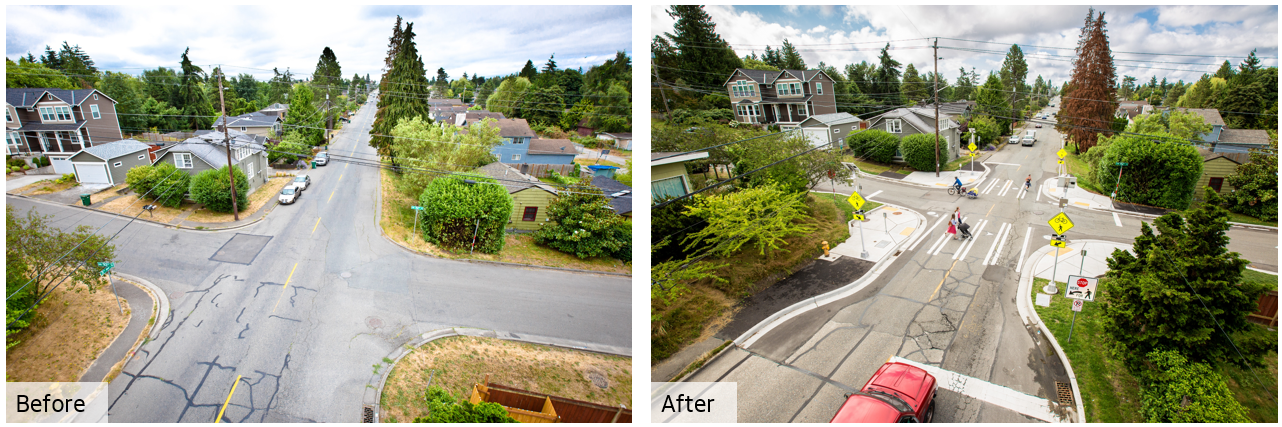
(Photo of Seattle’s safety upgrades they’re building with Safe Streets for All.)
We must stop asking police to solve engineering problems. Safer roads come from better design, smarter policy, and targeted – not expansive – enforcement.
In Safe Roads for All, we outline strategies jurisdictions are already using to build a preventative approach. These solutions range from road design to limiting non-safety stops to vehicle-based safety technologies like alcohol ignition interlock devices.
Across the country, the results are clear:
Crashes and injuries drop when cities lower speeds and redesign streets.
When jurisdictions reduce low-level stops, public safety does not decline.
And police capacity and response time improve when non-police responders handle minor crashes.
Seattle lowered speed limits and invested in better signage and then saw a 22 percent reduction in crashes. Fayetteville, NC, de-emphasized low-level stops and reduced racial disparities in stops by 20 percent and fatal crashes by 30 percent. And in New Orleans, a non-police agency now handles over a third of traffic crash calls, saving 24,000 police hours in a single year.
We can also leverage technology like Intelligent Speed Assist that can prevent chronic speeding when repeated enforcement has failed. In fact, lawmakers in Albany can and should do so right now.
New Resources for Lawmakers and Local Officials
Alongside the report, we’ve published guidance with the Vision Zero Network for local officials working to advance safe transportation policy, including actionable steps to create a data-driven local enforcement strategy that is part of, and not separate from, preventative road safety efforts. And for lawmakers, our new guidance on drafting bills to limit non-safety stops make policing on the roads more targeted and effective.
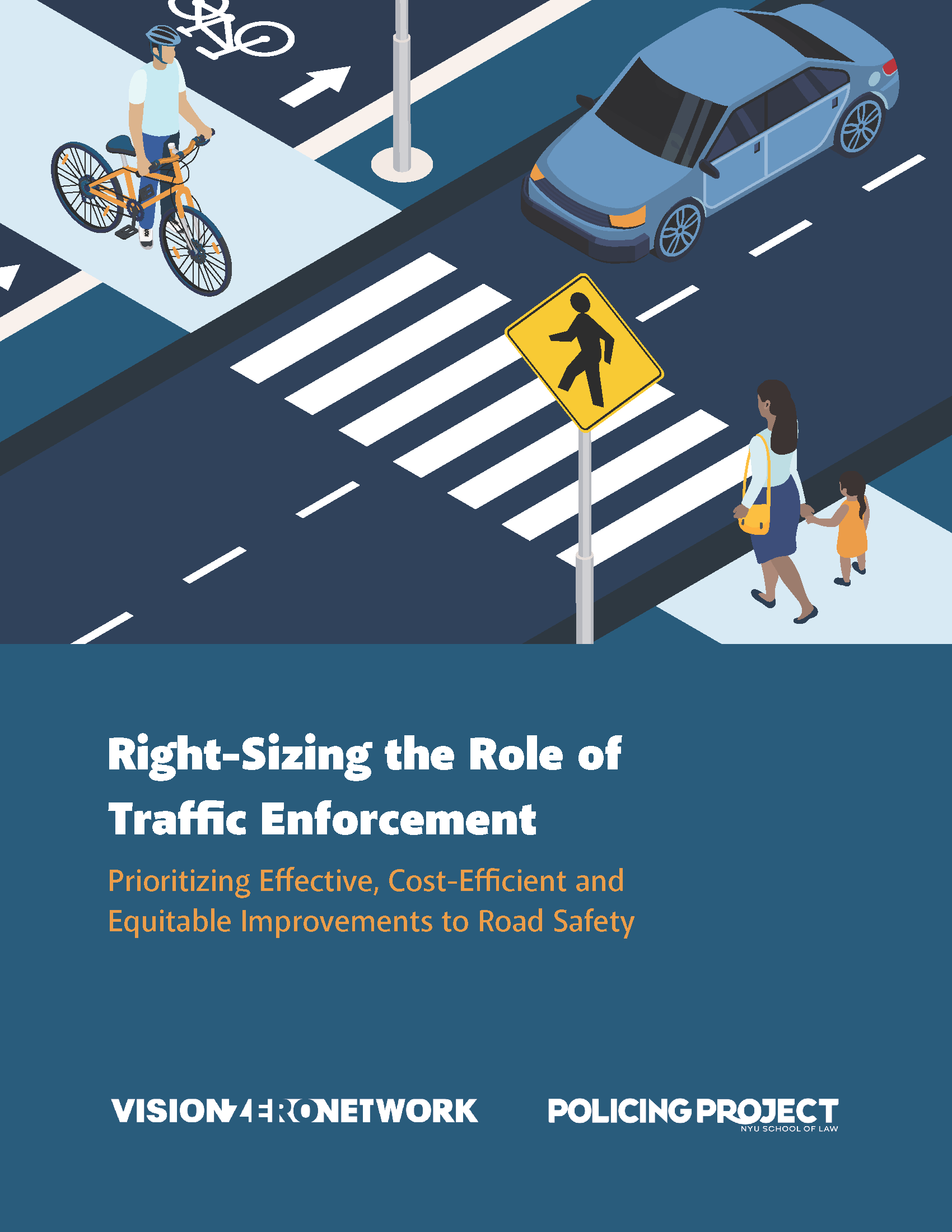
Right-Sizing the Role of Traffic Enforcement (Vision Zero Network and the Policing Project)
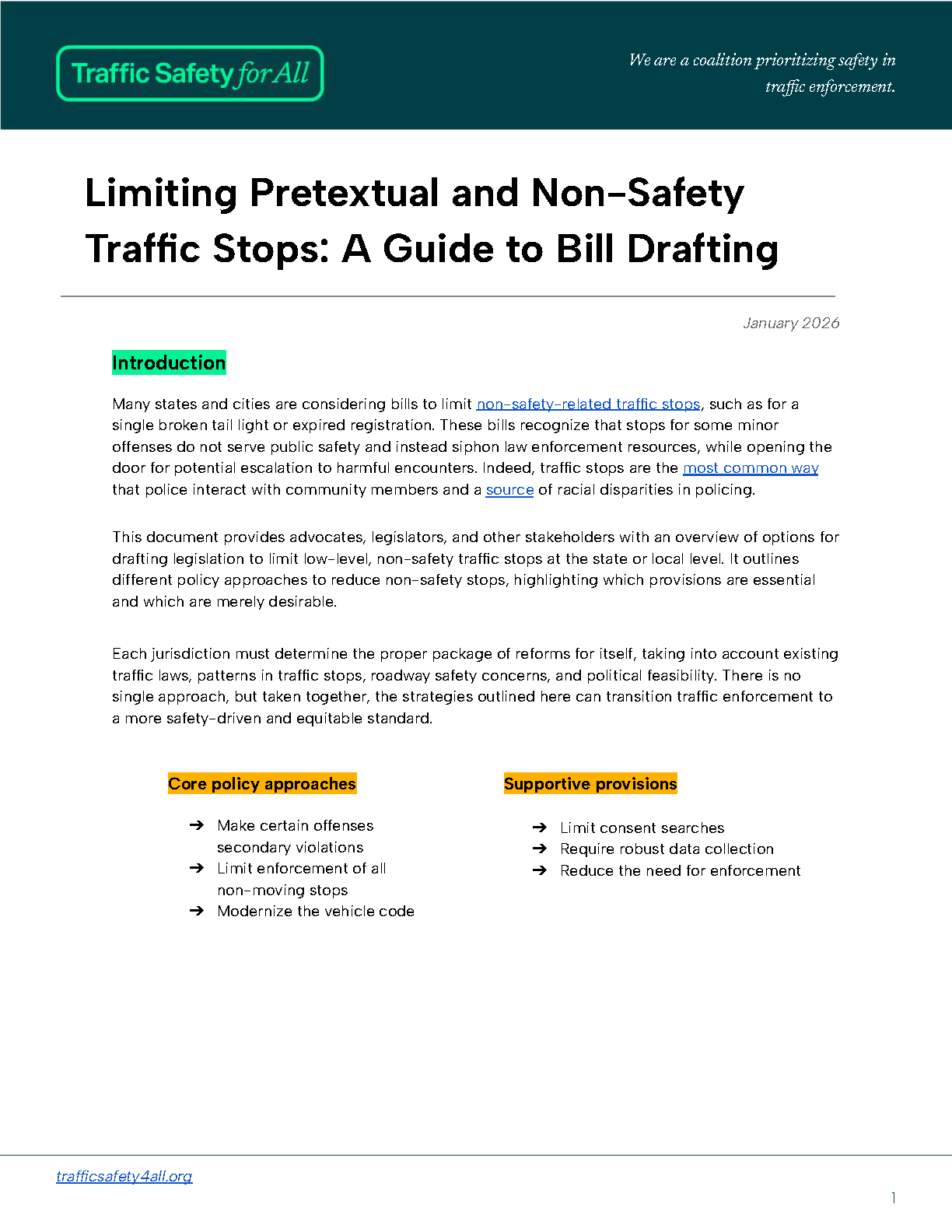
Limiting Pretextual and Non-Safety Traffic Stops: A Guide to Bill Drafting (Traffic Safety for All Coalition)
Bridging Evidence with Action
And this week, we brought together researchers, practitioners, and municipal leaders at our 2026 Convening on Right-Sizing Traffic Enforcement.
Every road is a set of decisions… about speed, space, and whose safety matters most.
Let’s make better decisions.
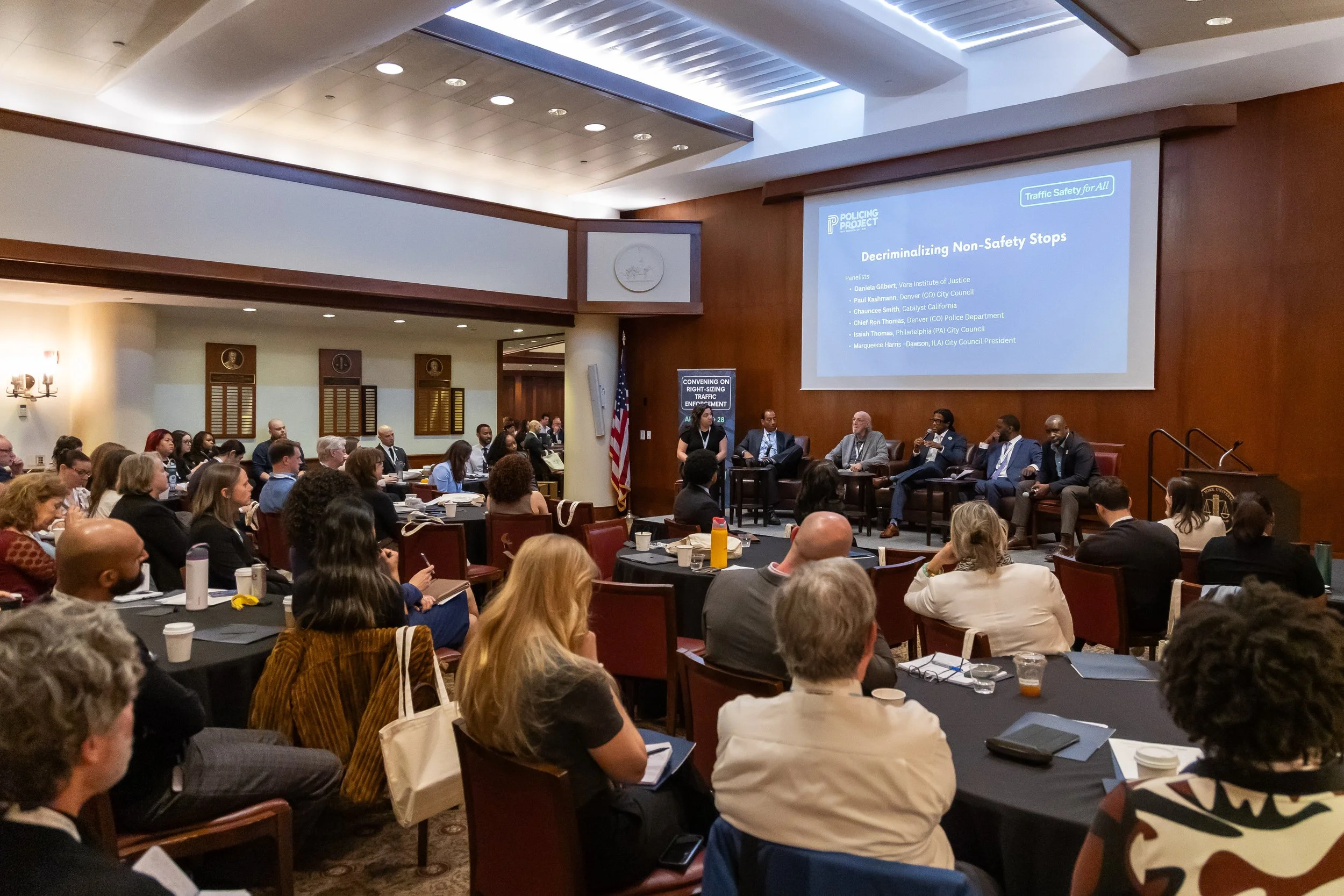
2026 Convening on Right-Sizing Traffic Enforcement. See all photos.
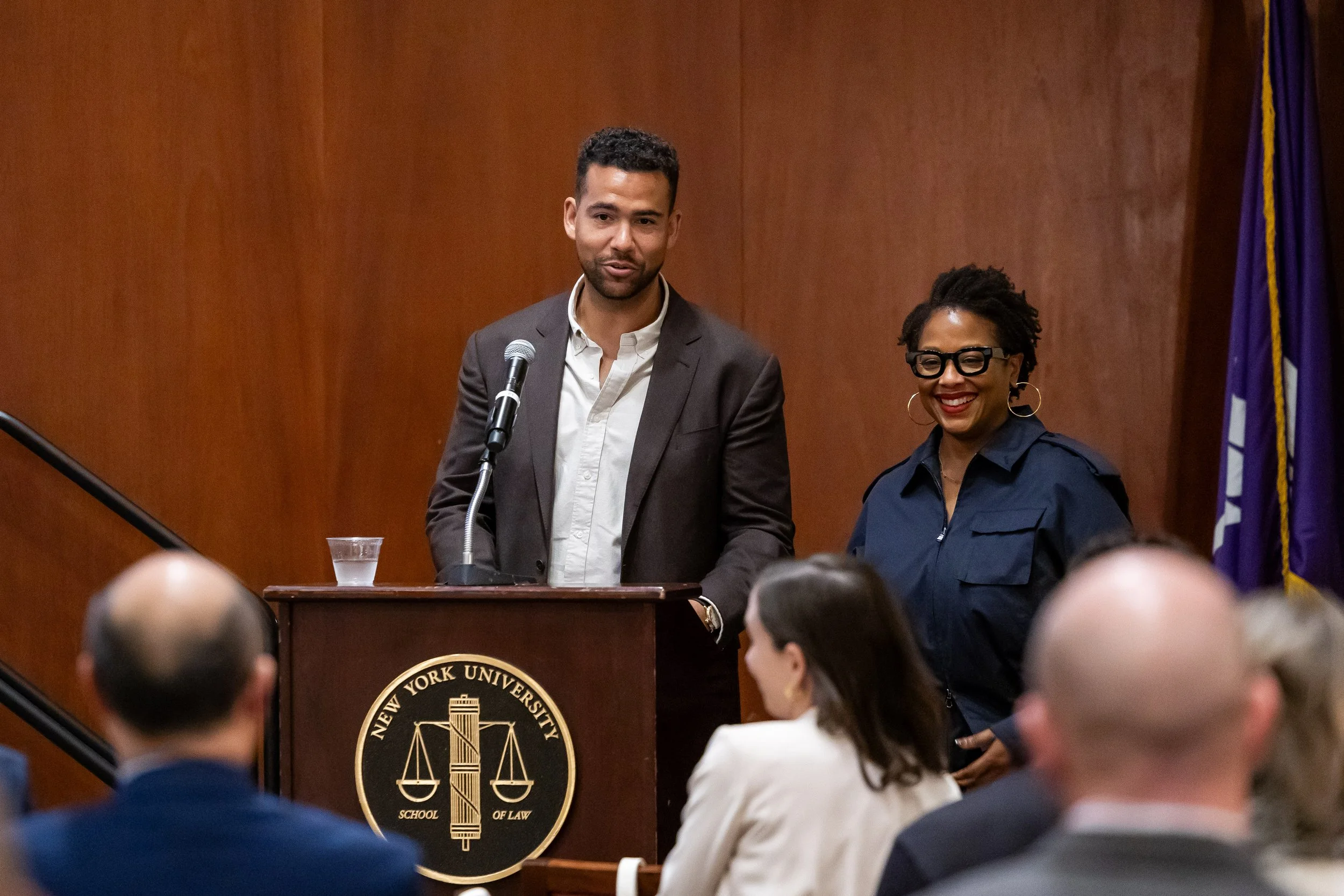
Policing Project Executive Director Max Markham and American Civil Liberties Union President Deborah Archer speak at the 2026 Convening on Right-Sizing Traffic Enforcement. See all photos.
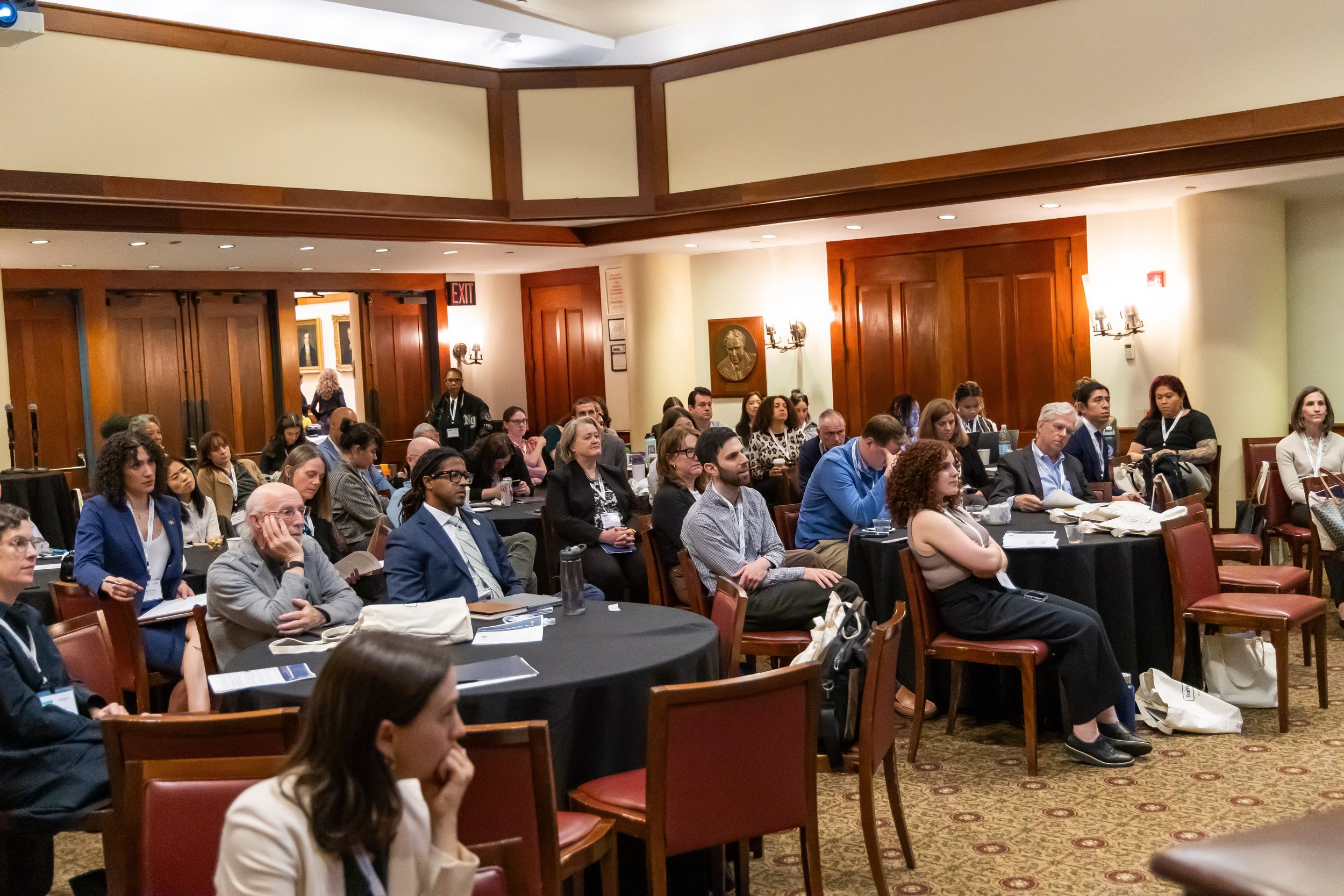
2026 Convening on Right-Sizing Traffic Enforcement. See all photos.