
AMICUS BRIEF IN Chatrie v. united states
On March 9, 2026, the Policing Project filed an amicus brief in the Supreme Court of the United States case Chatrie v. United States. The amicus brief urges the Court to avoid ruling in the all-or-nothing fashion advocated by the parties, and instead encourage urgently needed legislation to establish meaningful guardrails on data surveillance.
In Chatrie, the Court will consider the constitutionality of “geofence” warrants, which allow police to search cell phone users’ location data to identify suspects. The Court is considering the questions of whether the use of geofence warrants constitutes a “search” under the Fourth Amendment, and if so, whether they are permissible.
The organization’s brief argues that geofence warrants are a search under the Fourth Amendment, but that the Court should avoid either allowing or prohibiting all geofence warrants. Doing so, the brief argues, would in effect provide carte blanche for police to access the massive amounts of data available through new technologies or categorically remove a powerful public safety tool.
Instead, the brief argues that the Court should address this and other novel data surveillance questions raised by emerging technologies by ruling in a way that encourages lawmakers to act. Advanced surveillance technologies raise significant and highly complex privacy risks that are better addressed through nuanced legislation that can address the many issues raised by data surveillance, including privacy, data retention, minimization, and data security.
Read the full brief here.
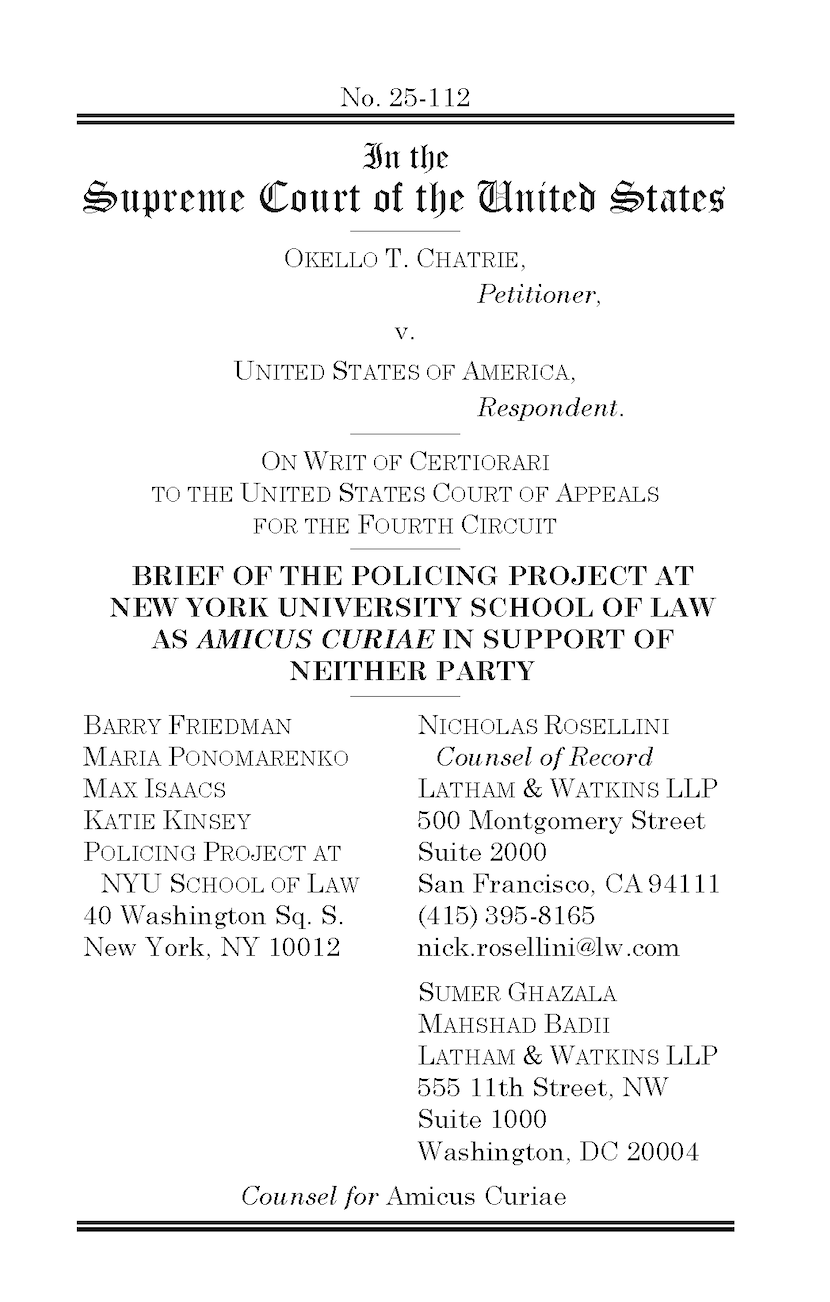
Read our full amicus brief in Chatrie v. United States here.